

Exploring power dynamics in bdsm restraints helps people see why many like them. About 10% of adults enjoy bondage play. This shows that many people like this special way to explore power. When you do bdsm, you might see how giving up control or being in charge can build trust and closeness. Experts say the good feelings from bdsm come from safe and agreed power play. This can make your body release dopamine and adrenaline. These chemicals make feelings stronger. Consent, clear talking, and caring about everyone’s feelings are very important for a good experience.
Key Takeaways
-
BDSM can help partners trust each other more. It can also make them feel closer. Talking about what you want and what you do not want is very important. This helps keep everyone safe.
-
Consent is very important in BDSM. You should always talk about what is okay and what is not. Use safe words so everyone feels good and respected.
-
Bondage lets people try being in control or giving up control. Both sides can help people learn about themselves. It can also make feelings between partners stronger.
-
Aftercare matters a lot. It helps partners feel better after a BDSM session. It makes sure both people feel cared for in their body and mind.
-
Learning and support are very important. Knowing about BDSM and joining friendly groups can help keep things safe. It can also make things more fun.
Power Dynamics in BDSM
Dominance and Submission
When you explore bondage, you step into a world where dominance and submission shape the experience. In this space, you might choose to take control or give it up. Dominance and submission are not just about who gives orders and who follows them. These roles help you and your partner build trust. You agree on what will happen before you start. This agreement makes everyone feel safe.
You can see dominance and submission in many forms. Sometimes, you might play these roles only during a scene. Other times, you might let these roles guide your daily life. The psychological dynamics of dominance and submission can make you feel strong emotions. You might feel excitement, comfort, or even relief. These feelings come from knowing that you and your partner respect each other's limits.
Bondage often brings out these roles in a clear way. When you tie someone up, you show dominance. When you let yourself be tied, you show submission. Both roles can feel powerful. You might feel proud when you take care of your partner as the dominant. As the submissive, you might feel free when you let go of control. This exchange is special because you both choose it. You both talk about what you want and what you do not want.
Tip: Before you try bondage, talk with your partner about what dominance and submission mean to you. Make sure you both feel comfortable and safe.
Control and Surrender
Bondage lets you explore control and surrender in a safe way. When you use bdsm restraints, you create a clear line between who holds power and who gives it up. This line is not about force. It is about trust and choice. You decide how much control you want to give or take.
Power dynamics in bondage are different from what you see in everyday life. In other forms of consensual adult play, you also find trust and vulnerability. In bondage, these feelings become even stronger. You and your partner agree on the rules. You know what will happen, and you know you can stop at any time. This makes the experience safe and exciting.
Bondage can help you learn about yourself. When you surrender, you might feel calm. You let someone else make decisions for a while. This can help you relax. When you take control, you might feel responsible. You make sure your partner feels safe and cared for. Both roles can help you grow and understand your feelings.
Here is a simple table to show how control and surrender might look in bondage:
|
Role |
What You Might Feel |
What You Might Do |
|---|---|---|
|
Dominant |
Confident, caring |
Give instructions, check in |
|
Submissive |
Relaxed, trusting |
Follow, communicate needs |
Bondage is not just about tying knots. It is about the feelings and trust you build with your partner. You both get to explore new parts of yourselves. You both get to feel safe while trying something new.
Psychological Aspects of Bondage

Bondage is not just about being tied up. It also affects your mind and feelings. You and your partner can learn new things about each other. The psychology of bdsm shows that both bondage submission and bondage dominance can help you feel free or creative. If you give up control, you might feel relaxed. If you take charge, you may feel strong. These feelings can help you grow and get closer to your partner.
Pleasure and Pain
Pain and pleasure are important in bondage. Sometimes, pain can feel good during bondage play. This is because your body reacts in special ways. Research shows people who do bondage can handle more pain. You may feel less scared and more excited. The psychology of bdsm says your brain can connect pain with rewards. This makes the experience fun.
Here is a table that shows how pleasure and pain work in bondage:
|
Findings |
Details |
|---|---|
|
Cortisol Changes |
Your stress system gets active when you submit in bondage. |
|
Endocannabinoid Changes |
Your pleasure system works during bondage activities. |
|
Pain Thresholds |
You might notice you can handle more pain in bondage play. |
|
Biological Mechanisms |
Hormones like testosterone and oxytocin affect your experience. |
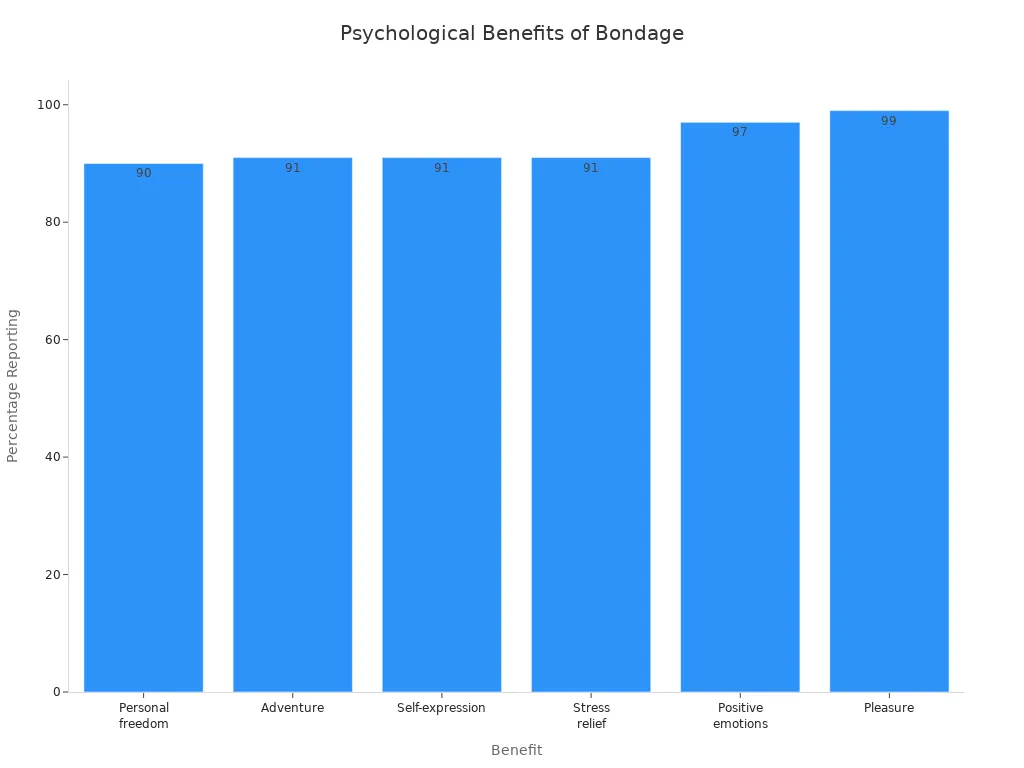
Many people say they feel good after bondage. The chart below shows the psychological benefits people report:
Neurochemical Release
The psychology of bdsm explains that strong chemical changes happen in your body during bondage. When you do bondage, your body makes endorphins, dopamine, and oxytocin. Endorphins help you feel happy even if there is pain. Dopamine gives you a reward for trying new things. Oxytocin helps you trust your partner and feel close.
Other chemicals like serotonin and noradrenaline also help. These chemicals make you feel calm and connected. The psychology of pain and pleasure shows these reactions can make bondage feel safe and fun.
Your life story, culture, and the roles you pick also matter. These things change how you feel about bondage. The psychology of bondage says this is why everyone’s experience is different.
Consent and Communication in BDSM Restraints
Consent and communication are the base of all consensual bdsm activities. When you try bondage, you need to talk with your partner. You both must agree on what you want to do and what you do not want. This helps everyone feel safe and respected. You can use negotiation to set rules and make sure everyone is comfortable.
Negotiation and Boundaries
Negotiation lets you and your partner decide how to use bondage and restraint. You should talk about what you want, what you do not want, and what you expect. Good communication helps you share your feelings and listen to your partner. You can use negotiation to set boundaries and make sure you both know what is okay.
Here is a table that shows good negotiation strategies for bondage restraint play:
|
Strategy |
Description |
|---|---|
|
Clear Communication |
Talk about desires, boundaries, and expectations. |
|
Establish Limits |
Set what is acceptable for you and your partner. |
|
Specificity |
Say which sensations and activities you want or do not want. |
|
Tool Negotiation |
Decide which tools and toys you will use. |
|
Health Concerns |
Share any medical issues that could affect the scene. |
|
Safety Measures |
Plan for safety with safe words and first aid kits. |
|
Aftercare Planning |
Discuss aftercare needs for emotional and physical well-being. |
You should always set boundaries before you start bondage. Boundaries help you feel safe and respected. You can talk about which restraint tools you want to use and which ones you do not. You can also share health concerns that might affect your experience. Aftercare planning is important. You can talk about what you need after the scene ends to feel good and cared for.
Tip: Use negotiation to check in with your partner during play. You can ask how they feel and make sure they still want to continue.
You can use safe words and body language to show when you need a break or want to stop. You should check in often to make sure everyone feels good. Negotiation does not end when the scene starts. You can keep talking and change boundaries if you need to.
Safe Words and Safety
Safe words are special words you use to stop or slow down bondage play. You and your partner should pick safe words before you start. Safe words help you say when you feel bad or want to stop. You can use words like "red," "yellow," or "green" to show how you feel. The traffic light system is popular in bdsm groups. "Green" means go, "yellow" means slow down, and "red" means stop.
Here is a table that shows important safety ideas in consensual use of physical restraints:
|
Concept |
Description |
|---|---|
|
Safeword |
A word or gesture to signal discomfort or the need to stop. |
|
A rule that focuses on safety, mental clarity, and mutual consent. |
|
|
Risk-Aware Consensual Kink (RACK) |
A rule that focuses on informed risk and avoids negative stereotypes. |
|
Traffic Light System |
A system using "green," "yellow," and "red" to show intensity and comfort. |
|
Education and Mentoring |
Learning from others to keep bondage safe and enjoyable. |
You should practice saying safe words before you start bondage. Both you and your partner need your own safe words. You can pick words that do not fit the scene, like fruits or colors. Safe words help build trust and set boundaries in bdsm relationships. You can use safe words to talk about physical or emotional needs.
-
You should practice safe words before hard scenes.
-
Both partners need their own safe words.
-
Common safe words are colors, fruits, or random objects.
-
The traffic-light system helps you show how you feel during restraint play.
-
You can use safe words to set boundaries and build trust.
-
Check in often to make sure everyone feels safe.
BDSM practices focus on safety, clear thinking, and mutual consent. You should plan aftercare routines and learn about the tools you use. Open and respectful communication helps keep all activities safe and consensual. You must make sure everyone is a fully informed and willing adult. You should follow legal and ethical rules in your area. You can avoid harm by using safety steps and medical care.
Note: Consent is always important. You must talk about boundaries, use safe words, and check in often. This keeps bondage safe and fun for everyone.
Emotional Impact of BDSM Restraints
Trust and Intimacy
Bondage can help you trust your partner more. When you both agree to try bondage, you show trust. You trust each other to follow rules and keep each other safe. You talk about what you like and what you do not like. This helps you feel close and safe together. You learn to listen and care for each other’s feelings. As you try new things, you may notice better trust and talking.
If you focus on talking, trust, and respect, you can explore your wishes safely. This also helps you feel closer to your partner.
Trust is the most important part of any BDSM relationship. Without trust, power play and being open cannot happen. You must believe your partner will follow the rules and keep you safe in every way.
Bondage can help you feel more connected. You share secrets and feelings with your partner. You learn to count on each other. When trust grows, you may feel even closer. You can use bondage to show care and pay attention to your partner. You check in often to make sure your partner feels good.
Good talking is very important in BDSM. It keeps everyone safe and helps you feel closer to your partner.
Vulnerability and Growth
Bondage lets you show who you really are. You might feel open and exposed when you give up control. You trust your partner to take care of you. This can help you grow and feel stronger inside. You learn about your feelings and what you can handle. Bondage may help you let go of stress and feel free.
Aftercare is important after bondage. You and your partner can use aftercare to feel safe and cared for. Aftercare helps you feel better and recover. You can use different aftercare ideas to help each other.
|
Aftercare Practice |
Description |
|---|---|
|
Gentle Stretching |
Helps you relax your muscles after bondage. |
|
Physical Monitoring |
Check for bruises or discomfort after bondage. |
|
Compliments Exchange |
Say kind words to each other after bondage. |
|
Solo Aftercare |
Take time alone to rest after bondage. |
|
Gentle Sensory Input |
Enjoy a warm bath or shower together after bondage. |
|
Low-Key Activities |
Do something fun and easy after bondage. |
Bondage can help you trust your partner and learn about yourself. You may feel closer to your partner. Aftercare can help you feel safe and happy. You can use bondage to try new feelings and grow together.
Misconceptions About BDSM and Bondage
Myths and Realities
Many movies and TV shows get bondage wrong. They often show it as bad or unsafe. Crime shows use bondage to make villains seem scary. These stories do not show real people who like bondage. Sometimes, characters use bondage in ways that are not safe. This can make you think bondage is always risky or wrong.
Here is a table that shows myths and facts:
|
Misconception |
Clarification |
|---|---|
|
All BDSM relationships are unhealthy |
Many BDSM relationships are healthy and consensual, contrary to popular belief. |
|
BDSM is synonymous with abuse |
BDSM is based on consent and mutual agreement, not abuse. |
Some people say those who like bondage have mental health issues. Some doctors and nurses think badly about bondage. Studies show this can cause unfair treatment and stigma. You might feel judged or alone if people believe these myths. This can hurt your confidence and make you scared to ask for help.
If you enjoy bondage, remember trust and respect matter most. You can build strong bonds with your partner by talking openly.
Books and movies like Fifty Shades of Grey do not show safe bondage. These stories forget about safety and consent. You should learn the facts and talk with your partner about what you need.
Consent vs. Coercion
It is important to know the difference between consent and coercion. Consent means you and your partner agree on what will happen. You talk about limits and make choices together. Coercion means someone forces you to do things you do not want. This is never safe or okay.
Experts say open talking and free choice make bondage different from abuse. You should never feel pushed or tricked. Safe bondage uses clear rules and respect. You and your partner must check in and use safe words.
-
Bondage needs open talking and consent.
-
Guidelines help you know what is safe and what is not.
If you follow these rules, you can enjoy bondage safely. You can avoid harm and build trust with your partner. Remember, healthy bondage always puts your well-being first.
Practical Tips for Exploring BDSM Restraints
Starting Safely
Safety is the most important thing when you try bondage. Talk with your partner about what you both want. Make sure you both feel safe and respected. Use tools made for bondage, like cuffs or soft ropes. These help stop injuries. Start with easy restraints, such as velcro cuffs or handcuffs with a double lock. These tools help keep blood flow normal and protect nerves.
Here are some steps to stay safe with bondage:
-
Get tools made for bondage.
-
Talk about what you want and your limits.
-
Follow Safe, Sane, and Consensual (SSC) rules. Do not use alcohol or drugs.
-
Check on your partner often during bondage.
-
Never leave someone alone when they are tied up.
-
Watch for any pain or numbness.
Tip: If you use a gag, keep the nose open. Never cover the mouth or nose during bondage.
Choosing Restraints
Pick restraints that are safe and simple to use. Many people new to bondage like soft cuffs made of velvet or nylon. These feel nice on the skin and help stop injuries. Bondage tape is also a good choice. It sticks only to itself and is easy to take off. Blindfolds can make bondage more fun by blocking sight and making other senses stronger.
Here is a table to help you pick beginner bondage restraints:
|
Restraint Type |
Features |
Why Beginners Like It |
|---|---|---|
|
Blindfolds |
Soft, easy to use |
Boosts sensory exploration |
|
Bondage Tape |
No sticky residue, easy removal |
Safe and simple for bondage |
|
Soft Cuffs |
Velvet or nylon, adjustable |
Comfortable and secure |
Try different restraints to see what you and your partner like best. Always check that restraints are not too tight or painful.
Education and Support
Learning about bondage helps you stay safe. You can read books like The New Topping Book or Screw the Roses, Send Me the Thorns for tips. Many websites and forums, such as FetLife or BDSMTrainingAcademy, give advice and support. Local classes and workshops let you learn skills and ask questions.
Support groups help you feel safe when you try bondage. These groups teach about consent, limits, and aftercare. You can join online or local groups to share and learn from others. Workshops show how to use safe words and signals. Aftercare helps you and your partner feel good after bondage.
Remember, learning and support make bondage safer and more fun. Always keep learning and asking questions.
You can find many good things for your mind and relationships when you try bdsm restraints. People say they feel more pleasure and trust with their partners during bdsm. Talking openly and agreeing together helps you set rules and keeps everyone safe. If you want to learn more, you can look at these resources:
|
Resource Name |
Description |
|
|---|---|---|
|
Center for Awareness, Response & Education |
||
|
National Coalition for Sexual Freedom (NCSF) |
Stands up for sexual freedom and shares legal help and workshops. |
|
|
Kink Academy |
Has online classes from teachers about BDSM and safety. |
|
|
Scarleteen |
Talks about BDSM, consent, and healthy relationships for young people. |
|
|
Bex Talks Sex |
Shares workshops about BDSM and building good relationships. |
FAQ
What does a safe word do in BDSM restraint play?
A safe word lets you stop or slow down the scene. You use it when you feel uncomfortable or want to pause. Safe words help you stay safe and build trust with your partner.
How do you choose beginner-friendly restraints?
You can start with soft cuffs, bondage tape, or blindfolds. These tools feel gentle on your skin and are easy to remove. Always check that restraints do not hurt or cut off blood flow.
Why is aftercare important after bondage?
Aftercare helps you and your partner feel calm and cared for. You can use hugs, gentle words, or a warm drink. Aftercare supports your emotional and physical well-being.
Can anyone try BDSM restraints?
You can try BDSM restraints if you are a willing adult and talk openly with your partner. You must agree on rules and use safety steps. Always respect each other's limits.
What should you do if you feel nervous about trying bondage?
You can talk with your partner about your feelings. Start slow and use simple tools. Learn from books or classes. Ask questions and check in often to make sure you feel safe.
.webp?w=500&h=500)
.webp?w=500&h=500)
.webp?w=500&h=500)
.webp?w=500&h=500)